Do You Install Flashing on Homes and Commercial Buildings?
Yes, we install flashing on houses, rentals, churches, and commercial buildings. Tell us what the flashing is around, such as a chimney, wall, vent, or skylight.
Flashing Installation Kings provides flashing installation, chimney flashing replacement, and step and vent flashing repair services in the Jeffersonville, IN area for both residential and commercial properties. Contact us now for a free estimate.
Flashing installation in Jeffersonville, IN costs anywhere from $280 to $1,420 on average for new flashing at one area, such as a chimney or a roof-to-wall run. The price depends on where the flashing goes, the chimney size, the metal used, the roof pitch and height, the roofing that has to come up, and any rotted decking found underneath.
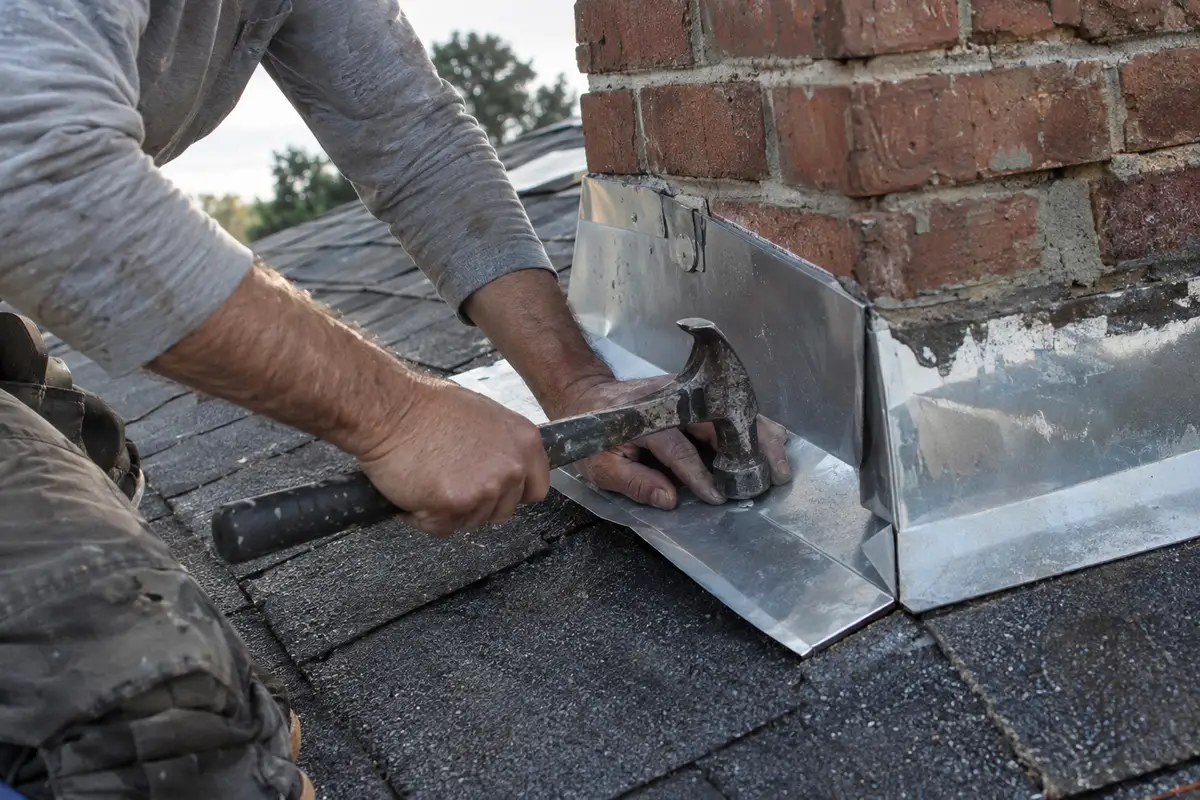
Yes, we install flashing on houses, rentals, churches, and commercial buildings. Tell us what the flashing is around, such as a chimney, wall, vent, or skylight.
Yes, we cover the Jeffersonville, IN area. Send us the property address and we'll confirm.
Yes, it can. Jeffersonville says building or renovation projects in its historic district need Historic Preservation Commission approval and a Certificate of Appropriateness. A reflash that changes visible metal, such as copper chimney flashing or new counter flashing cut into old brick, may fall under that review. If the home is in the district, we suggest asking the commission about your plans before we order materials.
Stains near a chimney, wall, vent, or skylight usually point to flashing. Daylight around the chimney from the attic, rust holes, and caulk-smeared metal are other signs we look for. A hose test with someone in the attic often confirms it.
Most flashing jobs can usually be scheduled soon after you approve the price, weather permitting. If water is coming in now, tell us and we'll try to tarp the spot sooner.
We need the address, where the leak is, the roofing material, and the number of stories. Photos of the spot and of any ceiling or attic stains help a lot.
No, as long as we can reach the roof and you've approved the price.
Yes, in most cases, so we can trace the water and check the wood.
No, not usually for flashing alone. Some towns want one once the job becomes a roof repair or reroof, and your local building department decides.
Yes, we confirm the price first. If we find rotted decking under the shingles, we show you and price it before doing extra work.
Yes, sometimes, when a storm or other sudden event damaged it. Flashing that failed from age or rust is usually treated as wear and tear. We can provide photos and an invoice.
Most flashing jobs take a few hours to one day. A large chimney, a long wall, or rotted wood underneath can add a second day.
Yes, we reflash brick, stone, and framed chimneys. On masonry we install step flashing under the shingles and counter flashing cut into the mortar joints to lap over it.
Yes, we build crickets on the uphill side of wide chimneys to split water around them. Many codes require one above a set chimney width, and your local office sets it.
Yes, we weave L-shaped step flashing in with each shingle course along sidewalls and dormers, nailed to the roof deck only so the joint can move without tearing.
Yes, we add kickouts that throw water into the gutter instead of down the siding. A missing kickout often rots the wall below the roof edge.
Yes, and this joint leaks often. We usually pull the bottom row of siding so the flashing tucks behind it.
Yes, we replace cracked rubber boots and rusted metal vent flashing. Tell us how many pipes come through the roof.
Yes, we reflash curb-mounted and deck-mounted skylights with step flashing or a maker's kit. If the glass or frame is failing too, replacing the skylight at the same time usually makes sense.
Yes, we install open metal valleys, including W-style, over an ice and water membrane. Valleys carry the most water on a roof, so they cost more than most flashing.
Yes, we slide drip edge under the first shingle course along the eaves and rakes to keep water off the fascia and deck edge.
Yes, but each needs its own details. Tile and slate can break when lifted, and metal roofs need flashing shaped to the panels. Tell us the roof type and its age.
Yes, we install base and counter flashing at parapets, curbs, and walls. Tell us if the roof is EPDM, TPO, or modified bitumen so we match it.
Yes, we install sill pans and head flashing at windows and doors. On an existing window that usually means removing siding or trim, so tell us what the wall is covered with.
Yes, we lift only the shingles around the flashing and put them back or match them. We'll warn you first if old shingles are likely to crack.
Flashing that is rusted through, caulked over several times, or still leaking after a repair needs replacing. We repair a small hole or loose piece on otherwise sound metal.
No, in most cases we put in new flashing with new roofing. Old flashing gets bent during tear-off and is full of nail holes.
Yes, we fix missing step flashing, face-nailed pieces, flashing buried in caulk, and laps that run water behind the metal. Send us photos of the work.
Yes, we replace flashing lifted by wind or dented by hail. Take photos before any cleanup if you plan to file a claim.
Yes, send us the report pages and photos and we can quote each flashing item separately.
Yes, we replace rotted decking and wall sheathing found under old flashing, after showing you the damage and the added price.
No, only for a short time. Sunlight breaks caulk and roof cement down within a few years, and tar can trap water against the metal. If you need a stopgap before we arrive, a tarp works better.
Yes, in most cases, but we won't open a roof in steady rain or on ice. Cold shingles crack more easily, so winter jobs can run longer.
We weave step flashing under each shingle course, set a vent boot on the shingles below with the upper shingles lapping over it, and cover the step flashing with counter flashing from the wall.
We mostly use painted aluminum or galvanized steel, with copper, stainless, or lead on request. Vent pipes get a rubber or metal boot, and nails always match the metal.
Aluminum and galvanized steel flashing usually lasts 20 to 40 years, stainless 50 or more, and copper far longer. Rubber vent boots often crack sooner.
Yes, on slate, masonry chimneys, or a home you'll keep for decades. Copper can last 100 years or more, while the aluminum and galvanized steel we usually install give 20 to 40 years for much less.
No, copper touching or draining onto aluminum, zinc, or galvanized steel corrodes the weaker metal fast. Tell us what your gutters are made of.
Yes, a vent boot on a low, walkable roof is a fair DIY job. We'd leave chimney, step, and valley flashing to a roofer, since most roof leaks start at flashing.
Yes, we haul off the old metal and sweep for stray nails.
